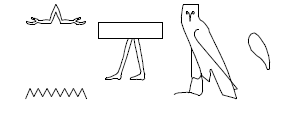
Heliography Symbols of Body Parts
Ancient Egyptians had recognized different body parts and organs, they referred to them with specific symbols by the Heliography language. There are about 250 anatomical words in ancient Egyptian; either from the butcher shop or the embalmer’s, using in the majority of cases characters representing animal physiology (mammals), and non-human also to describe body parts or actions performed by the human body in ancient Egypt.
Anatomical words in hieroglyphic writing reflect that form precedes function; meaning, as words describing form are more important in the illustration of the organ, part of the body, or its consistency than its function in the human organism. The body was seen as an ensemble of distinctive parts and its division was made more for the region of the body itself than by its function as we do today. Each region assembled the organs, muscles, tendons, substances flowing in that region, its liaisons (channels and articulations) [1].
| Heliographic Symbols | Meaning |
|---|---|
| Skull – djennet | |
| Brain - amem | |
| Nose – fenedj | |
| Mouth – er | |
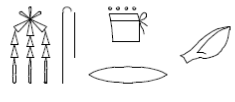 | Ear – medjer |
| Eye – iret | |
| Tooth – ibeh | |
| Stomach (mouth of the heart) | |
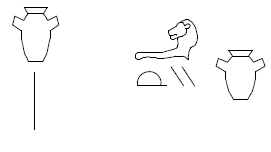 | Heart – ib ou haty |
| Lungs – sema | |
| Back bone (vertebral column) – iat | |
| Womb/abdomen/belly – het | |
| Stomach – mendjer | |
| Liver –miset | |
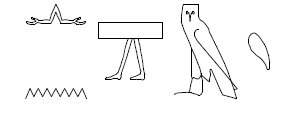 | Spleen - nenechem |
| Gall bladder – weded | |
| Bile – benef | |
| Intestines – mehetu | |
| Bladder – cheptit | |
| Pelvis – peheui | |
| Anus – aret | |
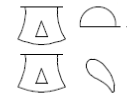 | Kidneys – geget |
| Skin – inem | |
| Channels/vessels – metu | |
| Pus – rit | |
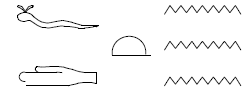 | Sweat – fedet |
| Menstruation– hesmen |
References:
1 Veiga, P.: ‘Health and Medicine in ancient Egypt; magic and science’, 2009